PySpark withColumn vs withColumns vs select: Which to Use
Three ways to add or change columns in PySpark — and one of them, used in a loop, quietly wrecks performance. Here's what each does and when to reach for it.
Read MoreThree ways to add or change columns in PySpark — and one of them, used in a loop, quietly wrecks performance. Here's what each does and when to reach for it.
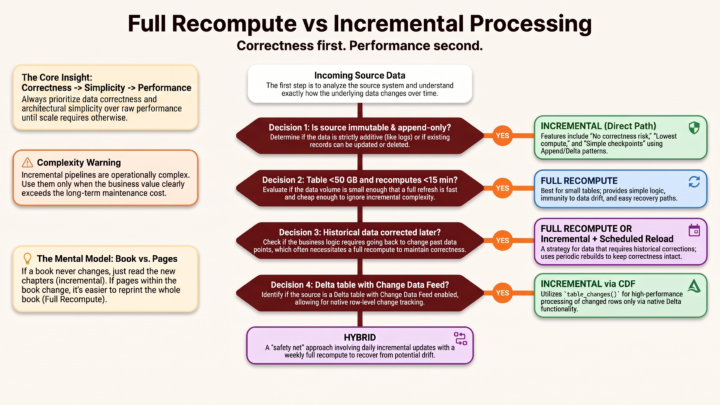
Read MoreEveryone assumes incremental is always the better choice. It isn't — for small tables it's over-engineering. Here's the real trade-off, a simple decision tree, and how to detect changes.
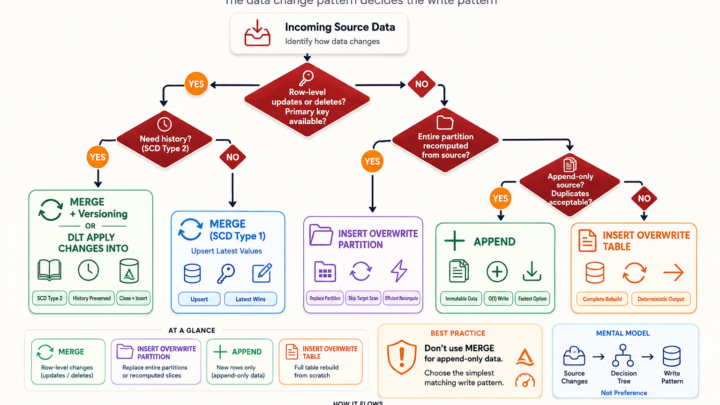
Read MoreReaching for MERGE by default is one of the most expensive habits in data engineering. The right write pattern depends on your source — here's the decision, one question at a time.
Read MoreThree ways to lay out a Delta table so queries read less data — and the senior skill isn't picking the newest one, it's knowing when NOT to switch. Explained with a bookstore.
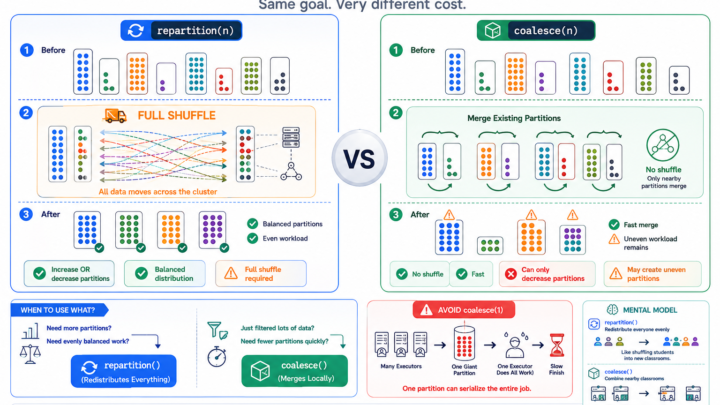
Read MoreBoth change the number of partitions — but one does a full shuffle and one doesn't, and that single difference decides your performance. Plus the coalesce(1) trap everyone falls into.
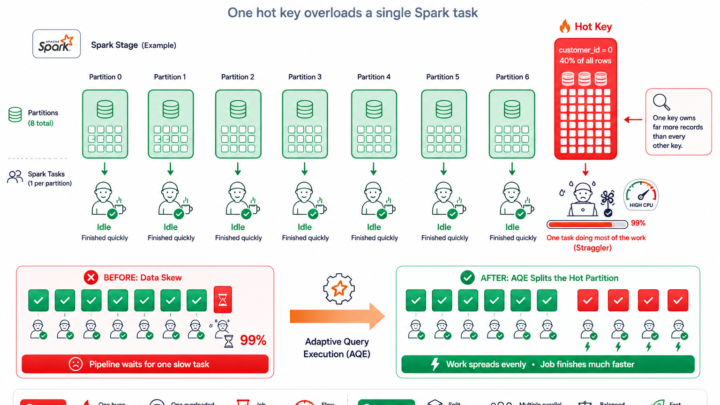
Read MoreYour job is "99% done" for an hour because one task got all the data. That's skew. Here's how to fix it with AQE, broadcast joins, skew hints, and salting.
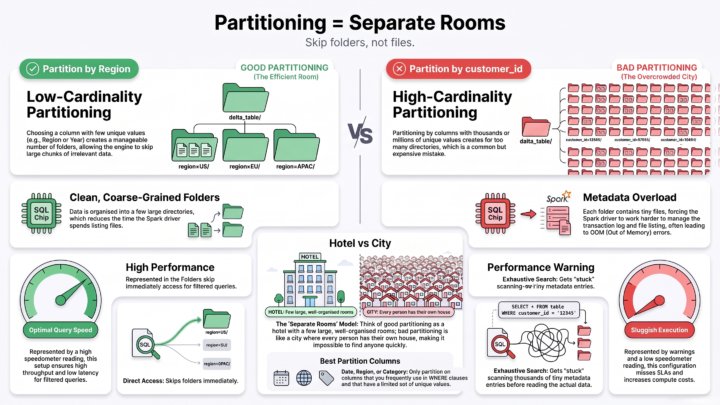
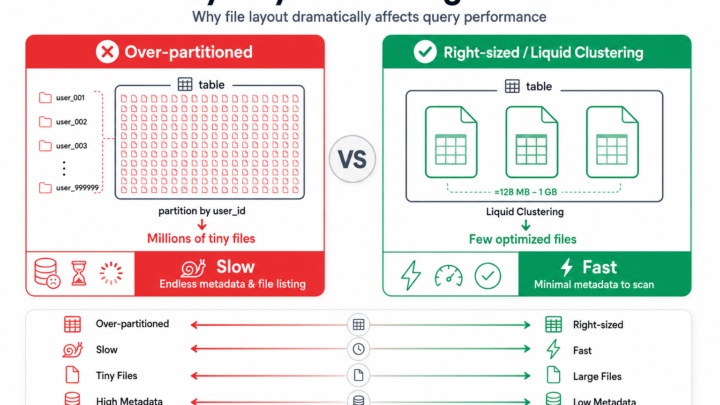
Read MorePartitioning by the wrong column shatters your table into millions of tiny files and grinds queries to a halt. Here's how to right-size it — and why liquid clustering is usually the better answer.
Read More