PySpark filter() vs where(): Is There Any Difference?
You see both in PySpark code and wonder which is "correct" or faster. The honest answer: they're the exact same function. Here's the proof — and the gotchas that actually cause bugs.
Read MoreYou see both in PySpark code and wonder which is "correct" or faster. The honest answer: they're the exact same function. Here's the proof — and the gotchas that actually cause bugs.
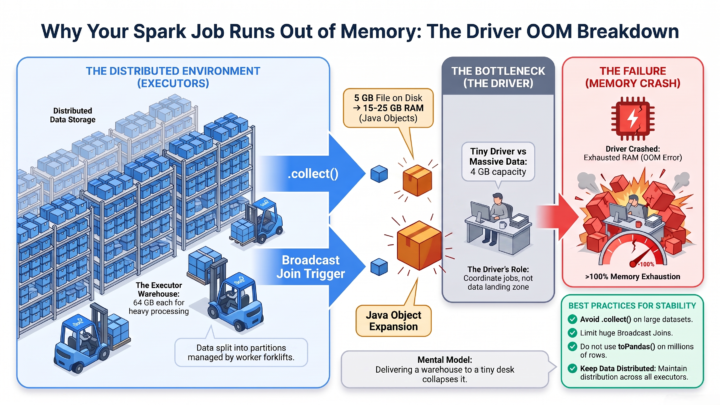
Read MoreYour executors have 64 GB and the job still dies with OutOfMemoryError. The culprit is the one part of Spark everyone forgets about — the Driver. Here's why it crashes and how to size it, in plain English.
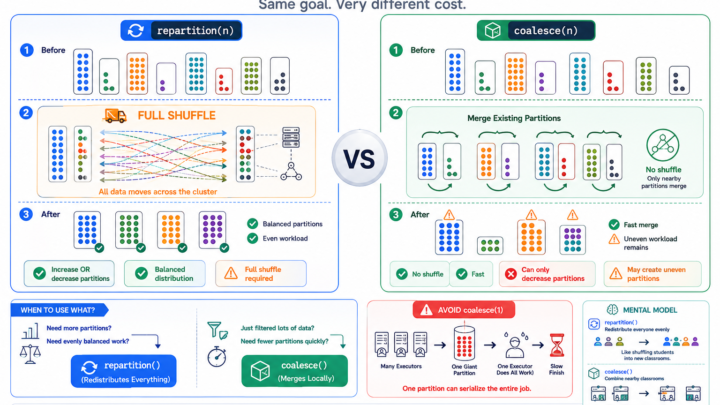
Read MoreBoth change the number of partitions — but one does a full shuffle and one doesn't, and that single difference decides your performance. Plus the coalesce(1) trap everyone falls into.
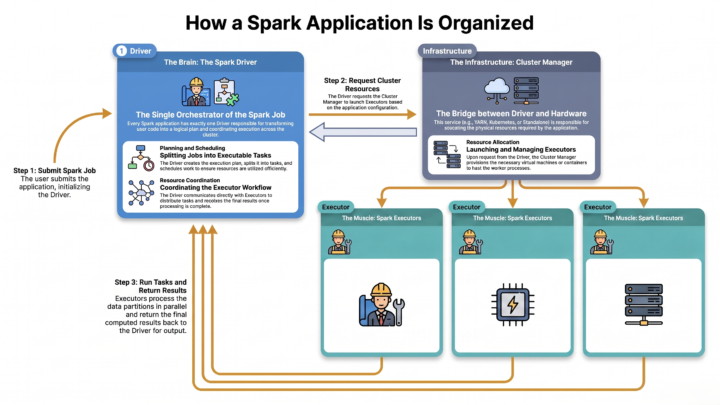
Read MoreThe words all sound the same and that's why it's confusing. One kitchen analogy makes the whole thing click — driver, executors, jobs, stages, tasks, and shuffles.
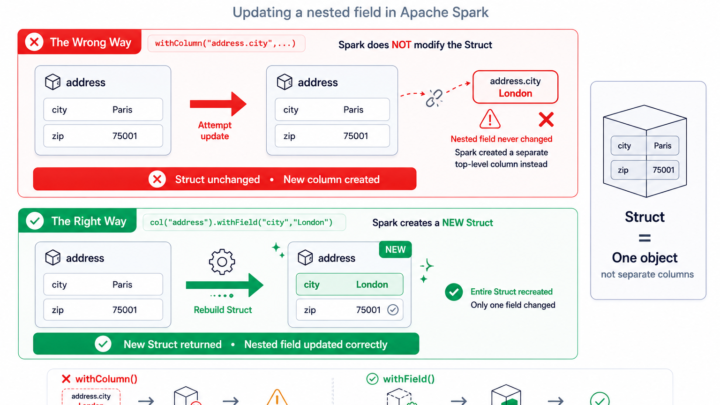
Read MorewithColumn("address.city", …) doesn't update the nested field — it quietly creates a weird new one. Here's how to actually update, add, and drop fields inside a struct.
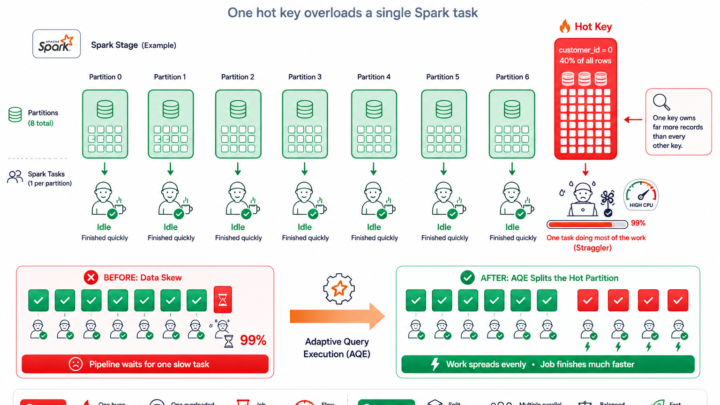
Read MoreYour job is "99% done" for an hour because one task got all the data. That's skew. Here's how to fix it with AQE, broadcast joins, skew hints, and salting.
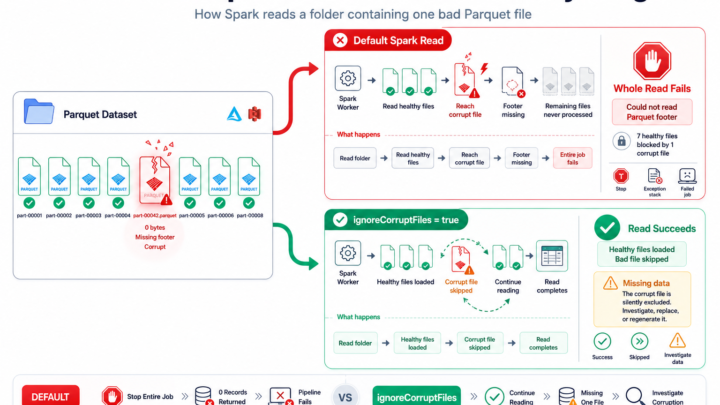
Read MoreOne bad file shouldn't take down the whole read. Here's why Parquet files corrupt, how to skip past them to get your data now, and how to find and fix the real culprit.
Read MoreNo error, just wrong data: partition by a column with empty strings and Spark reads them back as null. Here's exactly why — and how to keep the values distinct.
Read More