The Small Files Problem in Spark: How to Detect and Fix It
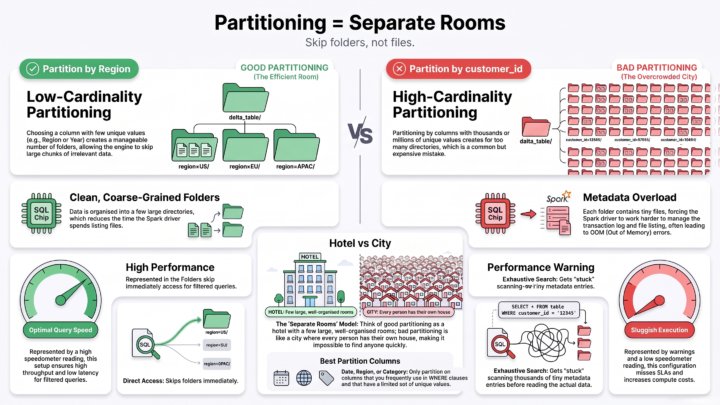
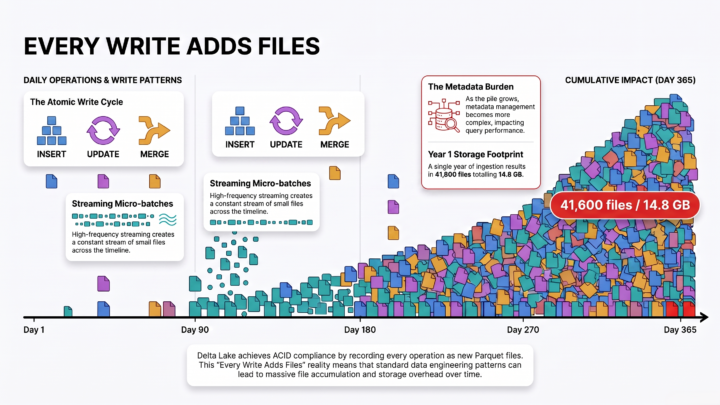
41,600 files holding 14.8 GB took 34 minutes just to scan. Here is what causes the small files problem, the exact numbers that reveal it in the Spark UI, and four ways to fix it.
Read More41,600 files holding 14.8 GB took 34 minutes just to scan. Here is what causes the small files problem, the exact numbers that reveal it in the Spark UI, and four ways to fix it.
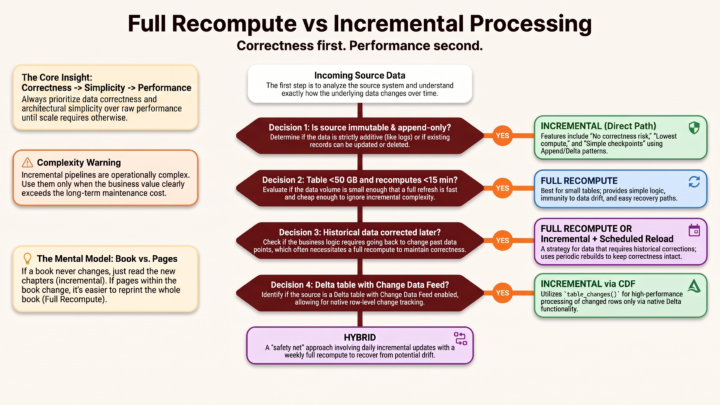
Read MoreEveryone assumes incremental is always the better choice. It isn't — for small tables it's over-engineering. Here's the real trade-off, a simple decision tree, and how to detect changes.
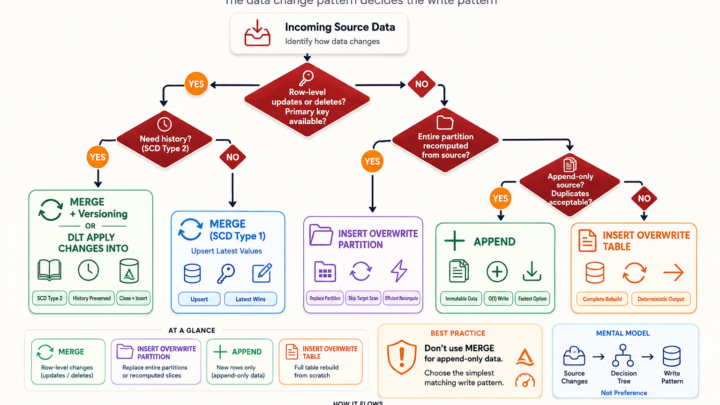
Read MoreReaching for MERGE by default is one of the most expensive habits in data engineering. The right write pattern depends on your source — here's the decision, one question at a time.
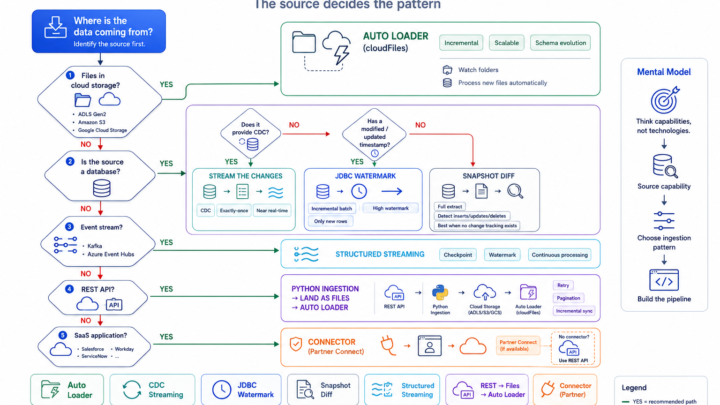
Read MoreGetting data in seems simple until the bill arrives or the SLA is missed. Two questions — what's the source, and how fresh must it be — decide the right pattern every time.
Read MoreThree ways to lay out a Delta table so queries read less data — and the senior skill isn't picking the newest one, it's knowing when NOT to switch. Explained with a bookstore.
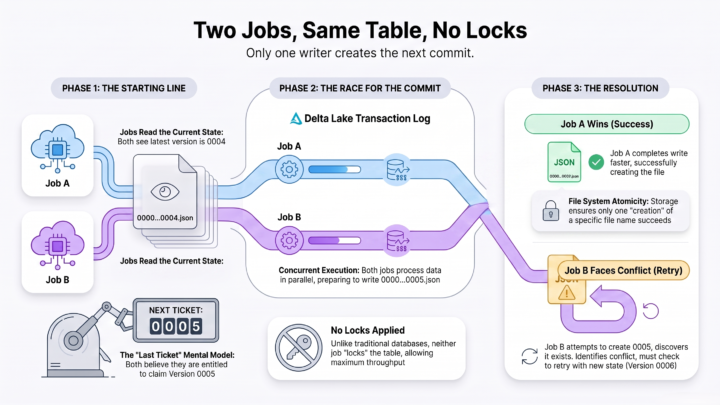
Read MoreNo database server, no lock manager — just files and a log. Here's how two Spark jobs can write the same table at the exact same moment and never corrupt it.
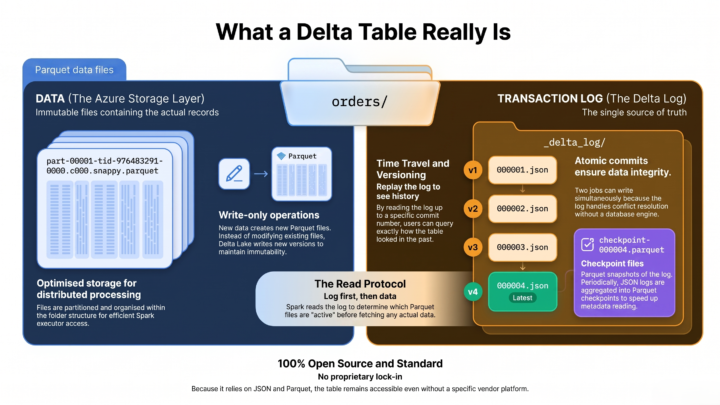
Read MoreFollow one Delta table from CREATE to time travel and watch exactly what happens on disk — the Parquet files, the transaction log, and how that log quietly powers ACID and versioning.
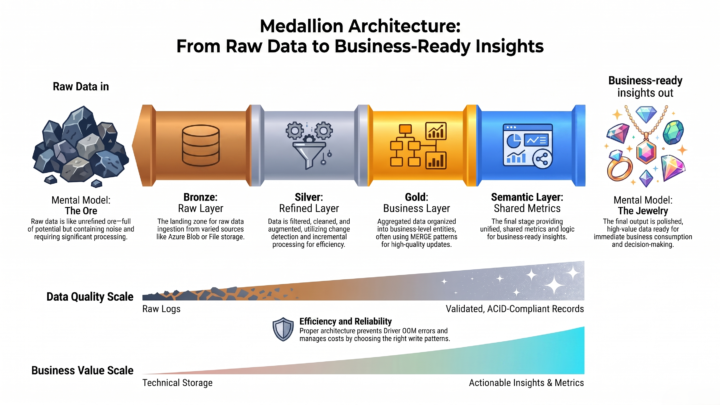
Read MoreRaw data goes in one end, business-ready data comes out the other — refined in three clear stages. Here's the Bronze, Silver, and Gold pattern (plus the semantic layer), traced through a real production pipeline.
Read More