PySpark withColumn vs withColumns vs select: Which to Use
Three ways to add or change columns in PySpark — and one of them, used in a loop, quietly wrecks performance. Here's what each does and when to reach for it.
Read MoreThree ways to add or change columns in PySpark — and one of them, used in a loop, quietly wrecks performance. Here's what each does and when to reach for it.
Read MoreYou see both in PySpark code and wonder which is "correct" or faster. The honest answer: they're the exact same function. Here's the proof — and the gotchas that actually cause bugs.
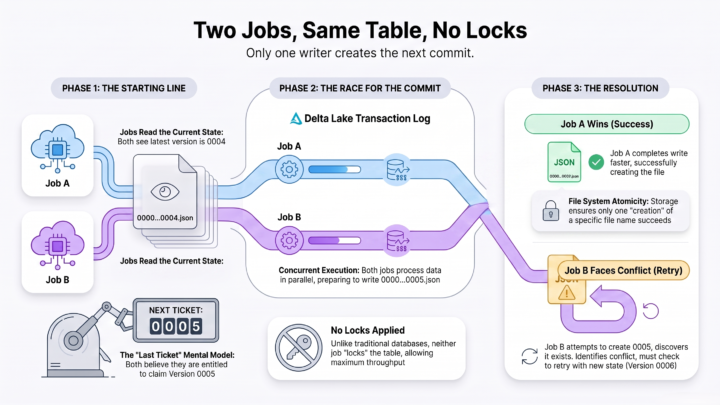
Read MoreNo database server, no lock manager — just files and a log. Here's how two Spark jobs can write the same table at the exact same moment and never corrupt it.
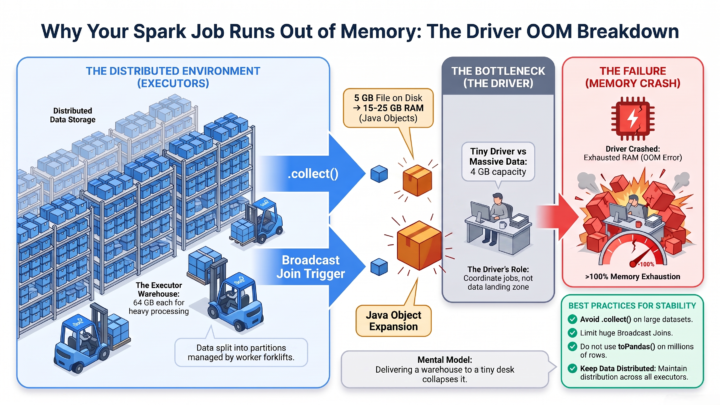
Read MoreYour executors have 64 GB and the job still dies with OutOfMemoryError. The culprit is the one part of Spark everyone forgets about — the Driver. Here's why it crashes and how to size it, in plain English.
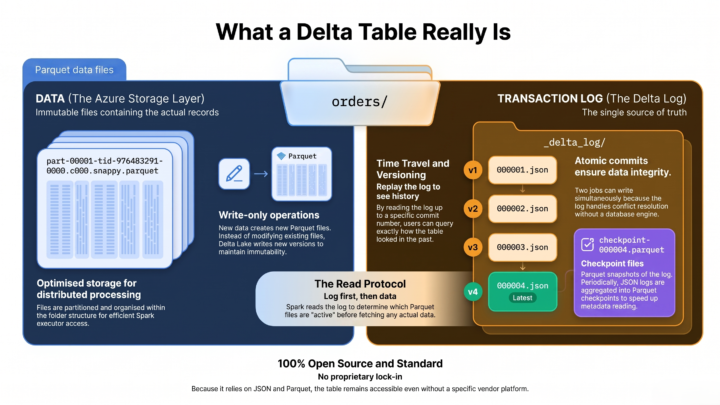
Read MoreFollow one Delta table from CREATE to time travel and watch exactly what happens on disk — the Parquet files, the transaction log, and how that log quietly powers ACID and versioning.
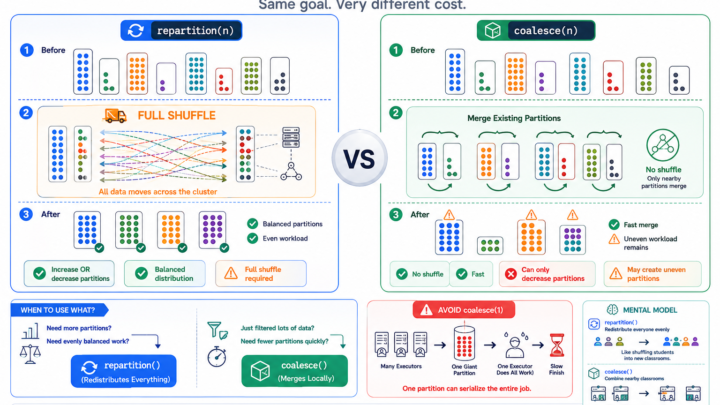
Read MoreBoth change the number of partitions — but one does a full shuffle and one doesn't, and that single difference decides your performance. Plus the coalesce(1) trap everyone falls into.
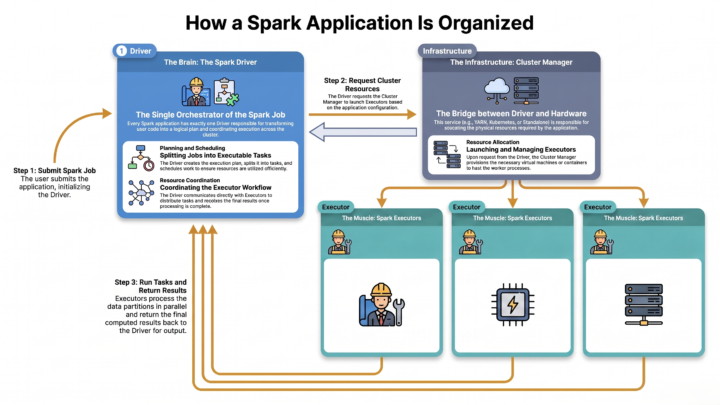
Read MoreThe words all sound the same and that's why it's confusing. One kitchen analogy makes the whole thing click — driver, executors, jobs, stages, tasks, and shuffles.
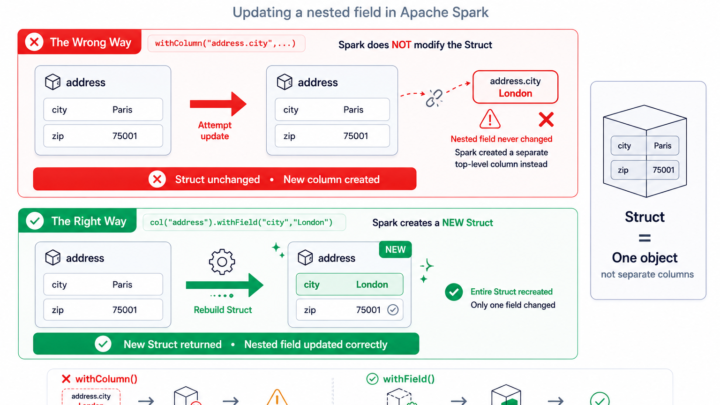
Read MorewithColumn("address.city", …) doesn't update the nested field — it quietly creates a weird new one. Here's how to actually update, add, and drop fields inside a struct.
Read More